
The Emission Sources Organizations Forget — Septic Tanks, Fertiliser, Refrigerants, Commuting
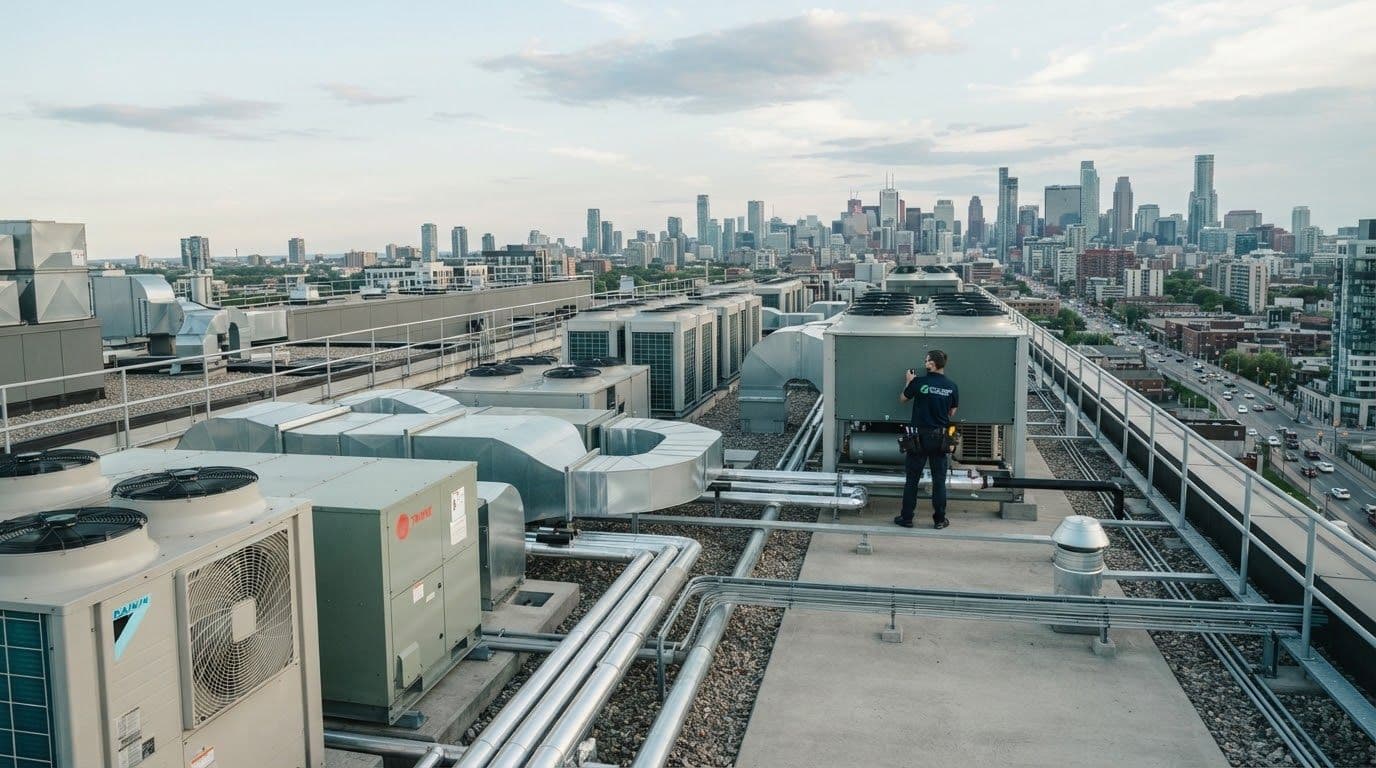
Invisible emission sources are where first reports fail — and the first set of questions verifiers use to gauge how thoroughly an organization did its homework.
A first carbon report usually covers electricity and fuel. Verifiers, however, always ask about the invisible sources — and several are larger than expected.
Septic tanks and wastewater treatment
Anaerobic decomposition in septic systems emits methane (GWP ~28) directly. A large office building with hundreds of staff produces these emissions daily — calculable from headcount and treatment type.
Nitrogen fertiliser (N-P-K)
Organizations with green areas, lawns or agricultural plots generate N₂O (GWP ~265) from soil nitrification after nitrogen fertiliser application — computed from fertiliser quantity and N content.
Refrigerant leakage
Air-conditioning and commercial refrigeration leak HFC refrigerants with GWPs in the thousands. Every refrigerant top-up is evidence of leakage that belongs in Scope 1.
Employee commuting
Scope 3 category 7 — 500 employees driving an average 30 km daily produce hundreds of tonnes per year. An annual travel-mode survey provides the data.
“The verifier is not asking about sources you reported — they are asking about the ones you did not”
In GCarbon
Purpose-built modules cover septic tanks, N-P-K fertiliser, refrigerants, employee commuting by travel mode, and even tree sequestration — enter the basic data and the system selects the right equation and emission factor for you.
Running a complete source screening
A physical site walk with a checklist works best: the plant room (fuel, boilers) · every air-conditioning unit (refrigerants) · wastewater systems and septic tanks · green areas (fertiliser) · the car park (company fleet) · and CO₂ fire extinguishers. Note everything that burns, can leak, or decomposes — then decide what is material enough for ongoing collection.
De minimis — how small is small enough to cut
Standards permit excluding very small sources (commonly capped at a combined 1-5% of the total), but the rule is "assess, then exclude" — never "unknown, so uncounted." The difference matters greatly to verifiers: an assessed-and-justified exclusion shows a complete process, while a silently missing source is a red flag that invites digging through the whole report.
GCarbon Team
Carbon accounting specialists