
The 7 Greenhouse Gases and GWP — Why a Tonne of CH₄ Is Not a Tonne of CO₂
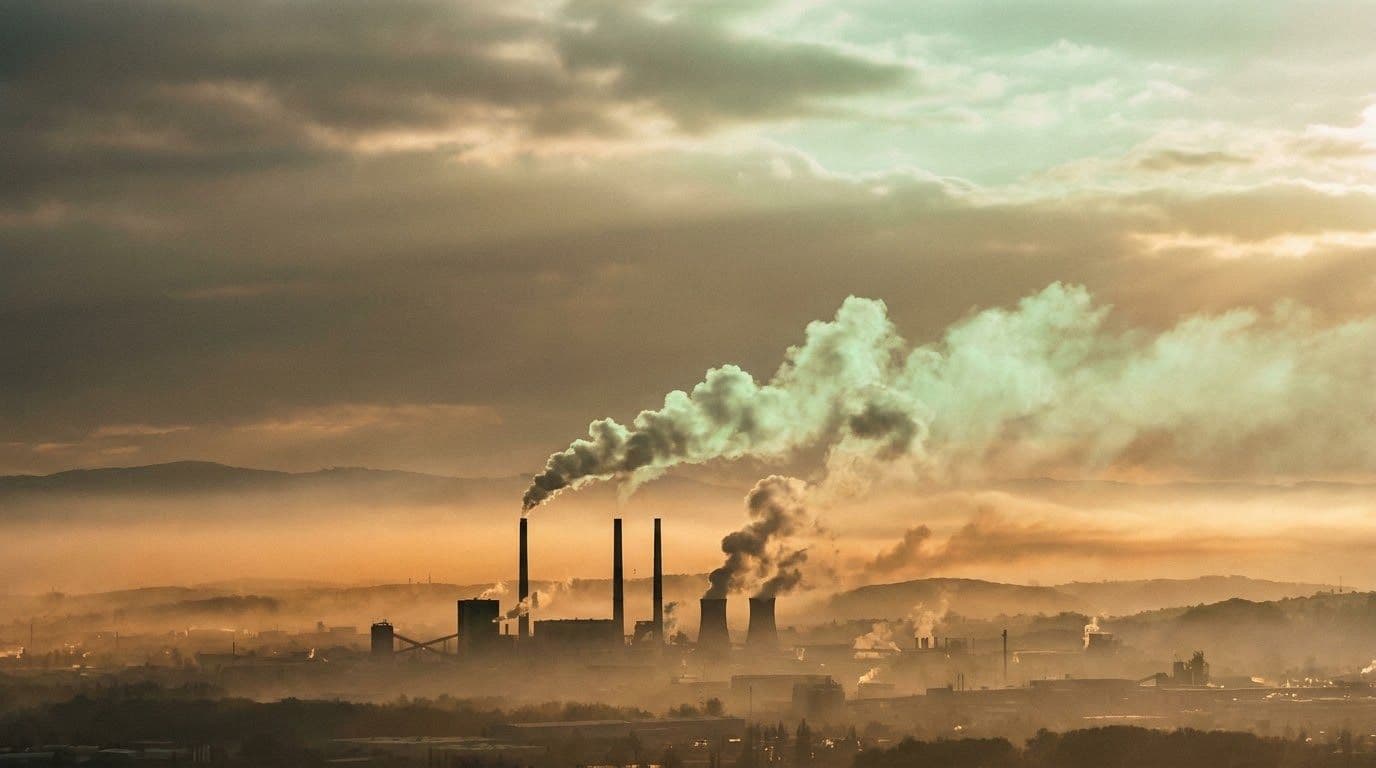
Why do international standards require counting seven gases when most people only know CO₂? Because the others, though smaller in volume, are tens to tens of thousands of times more potent.
Corporate carbon accounting counts far more than carbon dioxide. International standards cover seven greenhouse gases: CO₂, CH₄ (methane), N₂O (nitrous oxide), HFCs, PFCs, SF₆ and NF₃.
GWP — the multiplier that makes gases comparable
Each gas traps heat differently. Global Warming Potential (GWP) values from IPCC AR5 convert every gas into a common unit, CO₂ equivalent (CO₂e). Methane has a GWP of roughly 28, so one tonne of methane equals 28 tonnes of CO₂. SF₆, used in high-voltage switchgear, has a GWP in the tens of thousands.
One source, several gases
A single fuel combustion event emits CO₂, CH₄ and N₂O at the same time. Sound accounting calculates each gas separately, applies its own GWP, and only then aggregates — rather than using a single blended number. ISO 14064-1 additionally requires biogenic CO₂ (from biomass) to be reported separately from the gross total.
In GCarbon
Every recorded activity is computed across all seven gases automatically using the IPCC AR5 GWP set, displayed per gas and summarized in kg CO₂e with biogenic split out per the standard — no one has to remember the multipliers.
“The smallest gas in the inventory can become the largest number after multiplying by GWP”
When GWP versions change, so do the numbers
GWP values are revised with every IPCC assessment — methane was 25 under AR4, 28 under AR5, revised again in AR6. Organizations reporting across years must state which set each report uses, and when the referenced standard (such as TGO) adopts a new set, the system must recalculate history without destroying it.
Which gas hides in which activity
HFCs hide in every air-conditioning and refrigeration unit. SF₆ sits in high-voltage switchgear of factories and large buildings. N₂O comes with nitrogen fertiliser and combustion. CH₄ rises from septic tanks, landfills and fermentation of every kind — know this map and you know exactly whom to ask and for which documents.
GCarbon Team
Carbon accounting specialists